
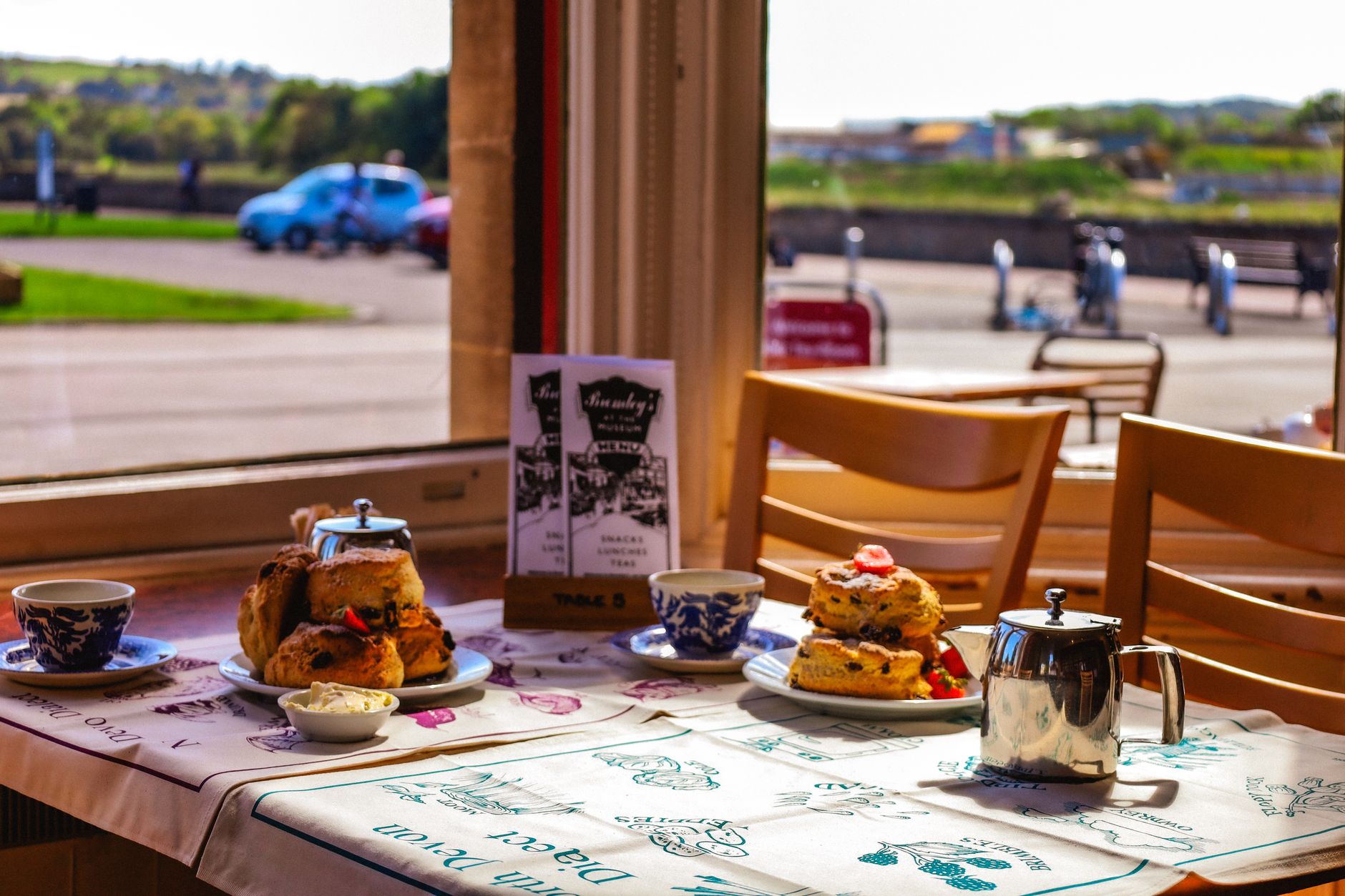
The British Tradition of Afternoon Tea: A Complete Essex Guide
The British tradition of afternoon tea began as a private fix for hunger rather than a national ceremony. Anna Russell, seventh Duchess of Bedford, called for tea, bread and butter at four o’clock in the 1840s, and within twenty years the British tradition of afternoon tea had settled into drawing rooms from Bath to Brentwood. Essex adopted the habit early, partly because the county sat on the tea routes into London and partly because its market towns had the bakeries to support it. A proper sitting still follows the same three-tier logic: savoury first, scones second, pastries last, with a pot of leaf tea refreshed at least twice. Expect to pay £22 to £38 per head across most of the county, rising past £55 for sparkling service at a country house hotel. This guide covers menus, etiquette, pricing and the practical question of where your dog can join you.
Where the British Tradition of Afternoon Tea Began
Anna Russell complained of a 'sinking feeling’ in the long gap between a light lunch and a dinner served at eight. Her solution — tea, bread and butter taken privately at four — became a social invitation once she returned to London for the season. By 1865 the ritual had escaped the aristocracy entirely.
The railways spread it. Lyons Corner Houses opened from 1894 and sold a full tea for sixpence, putting the custom within reach of clerks and shop girls. Essex commuters carried the habit back along the Great Eastern line, and market-town bakeries in Braintree and Saffron Walden adjusted their weekly output accordingly.
Two world wars nearly finished it. Rationing capped sugar at 8oz per person per week and butter at 2oz, which is roughly one batch of scones. Tea rooms survived by serving dripping sandwiches and stretching the leaf, and a surprising number of Essex establishments never closed their doors at all.
Why Essex Kept the Custom Alive
The county’s geography helped. Docks at Tilbury handled chests from Assam and Ceylon, so decent leaf tea stayed available when inland towns went short. Village halls used tea as fundraising currency, and church fetes across Rochford and Uttlesford still price a cream tea at £5 to £7 a head.
That fundraising instinct never faded. Community centres in Chelmsford, Maldon and Harlow run monthly tea afternoons for older residents, typically charging £4 and covering costs through raffle sales. These sittings preserve details the hotels have quietly dropped, including bone china cups and a knitted cosy on every pot.
What Belongs on a Proper Afternoon Tea Stand
The bottom tier carries savouries, and the sandwiches are not negotiable. Cucumber, egg mayonnaise with cress, smoked salmon and coronation chicken form the standard four, cut into fingers with the crusts removed. A good kitchen makes them within 40 minutes of service; anything earlier dries at the edges.
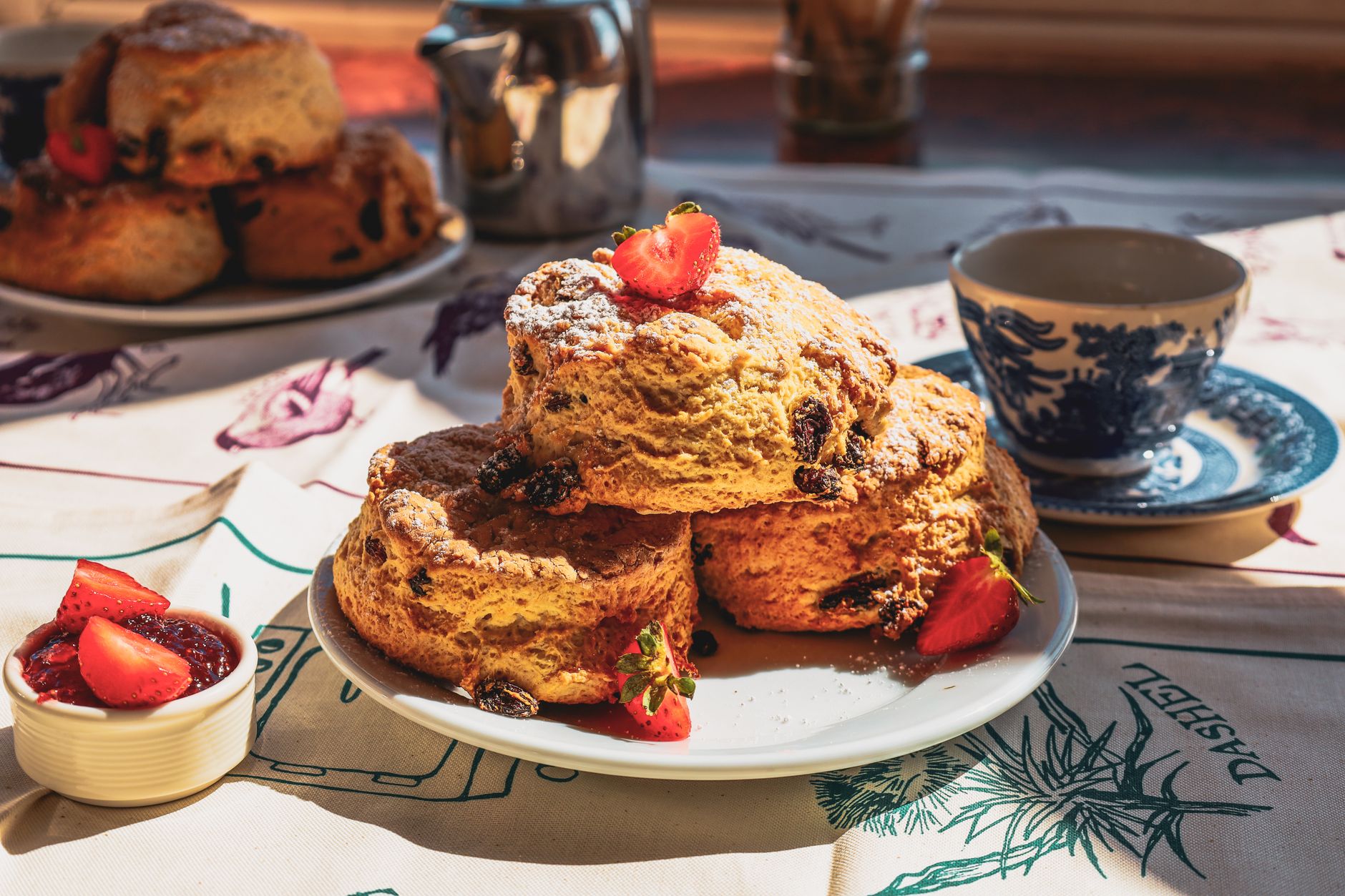
Scones occupy the middle tier and decide the reputation of the venue. Two per person is standard, one plain and one fruited, served warm rather than hot. Cornish clotted cream at 55% butterfat is the benchmark, and a strawberry preserve with visible fruit beats a smooth jelly every time.
The top tier holds four or five pastries: a lemon tart, a chocolate éclair, a fruit tartlet, a Victoria sponge finger and often a macaron. Tea choice matters as much as the food. Assam and Ceylon carry milk comfortably; Darjeeling, oolong and jasmine do not, and good staff will say so unprompted.
| Sitting type | Typical Essex price per head | What you get |
|---|---|---|
| Community hall tea | £4–£7 | Scone, cake slice, unlimited refills |
| Cream tea | £6–£12 | Two scones, clotted cream, preserve, pot of tea |
| Classic afternoon tea | £22–£30 | Three tiers, bottomless leaf tea |
| Champagne afternoon tea | £38–£55 | Three tiers plus a 125ml glass |
| Country house hotel tea | £45–£70 | Three tiers, live piano, full table service |
Etiquette That Still Matters at the Table
Milk first or last still divides tables. The historical answer is practical: milk went in first to stop thin porcelain cracking under boiling water, so bone china owners poured the tea first to show off their crockery. Either order works with modern china, though tea first lets you judge the strength.
Never slice a scone with a knife. Break it horizontally by hand into two halves, dress one half at a time, and eat each in two or three bites. Cornwall puts jam under cream, Devon reverses it, and Essex tea rooms sensibly serve both components separately so guests can choose.
The extended little finger is a myth invented by Victorian satirists. Hold the handle between thumb and index finger, support the base with the middle finger, and keep the saucer in your other hand when standing. Stir back and forth rather than in circles, then rest the spoon behind the cup.
Dog-Friendly Afternoon Tea Across Essex
Essex tea rooms have quietly become dog country. Walled gardens at Coggeshall, Dedham and Finchingfield keep water bowls by the door, and most kitchens will bring a plain oat biscuit on request. Flat-faced breeds dominate the courtyards, because a 90-minute sitting suits their stamina better than a working spaniel’s.
That popularity shows on the noticeboards beside the till. A card reading french bulldog puppy for sale rarely survives a fortnight in a busy village tea room, and owners trade breeder recommendations across the scone tier. Adverts worded puppy french bulldog for sale with no kennel details now attract far more suspicion than they once did.
Prices anchor most of those conversations. A credible puppy for sale french bulldog listing in Essex sits between £1,800 and £3,500, while the average french bulldog puppy price uk figure quoted by welfare charities hovers near £2,400. Anyone advertising a french bulldog puppy for sale uk below £1,000 deserves patient, specific questions before money changes hands.
Reading a Local Puppy Listing Before You Reply
Colour claims drive the biggest premiums. A blue french bulldog puppy for sale is often advertised at £4,000 or more, though the dilute coat carries a documented risk of follicular alopecia. Listings phrased puppy french bulldog for sale uk on regional boards should still show respiratory grading and a Kennel Club registration number.
Other breeds share the same cork board. Cards headed english bulldog puppy for sale near me and british bulldog puppy for sale near me tend to quote from £2,000, while an american bulldog puppy for sale near me usually starts around £1,200. A mini bulldog puppy for sale almost always means a crossbreed rather than a recognised type.
Tea room noticeboards are unregulated, so treat a puppy bulldog for sale near me card as a starting point rather than a recommendation. Ask to see the mother with the litter, request health certificates by email before travelling, and never pay a deposit against photographs alone, however convincing they look.
- Call ahead: many Essex tea rooms allow dogs in the garden and conservatory only, never the main dining room.
- Book the first sitting at 12:30pm — quieter rooms mean less barking and better table spacing.
- Bring a mat, because tiled floors get cold and a settled dog stays quiet for the full 90 minutes.
- Skip the clotted cream entirely; 55% butterfat carries a real pancreatitis risk in small breeds.
- Check the water bowl policy in summer, as flat-faced dogs overheat above 22°C within minutes.
Prices, Booking Windows and Hosting at Home
Booking windows tighten fast. Mother’s Day and December weekends at Essex country house hotels fill eight to ten weeks ahead, and most venues now take a £10 per head deposit against no-shows. Midweek sittings between Tuesday and Thursday often carry a 15% discount and noticeably better table spacing.
Hosting at home costs less than most people expect. Loose-leaf Assam runs about £4 for 125g, which brews roughly 50 cups. Clotted cream is around £2.50 per 200g tub, a decent strawberry preserve £3, and 500g of self-raising flour under £1. Scones for eight cost roughly £6 in total.
Equipment matters more than the shopping list. A three-tier stand costs £15 to £25, a warmed pot holds temperature for the whole sitting, and a fine mesh strainer removes any need for bags. Warm the cups first: cold china drops a fresh brew by around 8°C almost immediately.
How do you host the British tradition of afternoon tea at home?
Work backwards from a 4pm start. Bake the scones that morning so they are three to four hours old at service, warm rather than reheated. Prepare sandwiches no more than 40 minutes ahead, cut them into fingers, and cover them with a damp cloth. Brew loose-leaf tea at 100°C for Assam and around 80°C for green or white leaf, using one teaspoon per cup plus one for the pot. Warm the teapot and cups before pouring. Set the table with side plates, small knives and linen napkins, and place the tiered stand centrally so nobody has to stand to reach the top level. Budget roughly £4 per head for eight guests.
Is afternoon tea the same as high tea?
No, and the two are frequently confused. Afternoon tea is a light mid-afternoon meal served between three and five o’clock on low parlour tables, which is why it was originally called low tea. High tea is a working-class evening meal eaten at a high dining table around six, built around hot dishes: pies, cold cuts, cheese, pickles and bread, with a pot of strong tea alongside. Northern England and Scotland still use the phrase in that original sense. Hotels often market high tea as a premium upgrade, which reverses the meaning completely. If a menu promises tiers of sandwiches, scones and pastries, you are booking afternoon tea whatever the card says.
What does a proper afternoon tea cost in Essex?
Expect £22 to £30 per head for a classic three-tier sitting at an independent Essex tea room, including a bottomless pot of leaf tea. A cream tea — two scones, clotted cream, preserve and a pot — runs £6 to £12. Country house hotels charge £45 to £70, usually with live piano and full table service, while a sparkling upgrade adds £12 to £18 for a 125ml glass. Community hall teas remain the genuine bargain at £4 to £7, often raising funds for local causes. Service charge of 10 to 12.5% is discretionary but is frequently added automatically to parties of six or more, so read the bill before paying.