
British Traditions of Monarchy: Ceremony, Symbols and Everyday Life
Few institutions shape national identity as visibly as the British traditions of monarchy, a layered inheritance of coronations, anointing oil, royal warrants and street-level celebration. The British traditions of monarchy never stayed inside palace railings; they filtered outwards into Essex market squares, village greens and front-room bunting whenever a jubilee or state occasion arrived. Reading them properly means holding three things together at once: the ceremonial machinery of state, the honours and heraldry that reward service, and the domestic habits ordinary households copied because the palace did them first. That last category is broader than tea and cake. It covers gardens, uniforms, table manners and, persistently, dogs, which is why a family comparing a puppy french bulldog for sale in Chelmsford one week can find itself reading about corgis, kennel clubs and royal patronage the next. This guide explains how the ceremonies work, what the symbols mean and how the customs survive locally.
Where the British Traditions of Monarchy Begin
Continuity is the point. Westminster Abbey has hosted coronations since 1066, and the Coronation Chair commissioned around 1300 still carries each new sovereign. St Edward’s Crown weighs roughly 2.23kg in solid gold, heavy enough that monarchs practise wearing it for weeks before the ceremony itself. Nothing about the object is convenient, and that is deliberate.
Recognition, Anointing, Investiture
The coronation splits into three acts. The sovereign is presented to the congregation for acclamation, anointed with chrism oil behind screens because the moment is considered too sacred to film, then invested with orb, sceptre and crown. Only the third act is fully televised, which is why most viewers remember the jewellery and not the theology.
Succession no longer favours sons. The Succession to the Crown Act 2013 ended male primogeniture for anyone born after October 2011 and removed the bar on marrying a Roman Catholic. Within hours of a demise, the Accession Council meets at St James’s Palace and a proclamation is read publicly from the balcony.
Constitutional power sits mostly in reserve. Royal assent has not been refused since 1708, when Queen Anne blocked the Scottish Militia Bill, yet every Act of Parliament still requires it. The monarch reads a government-written speech, signs what Parliament decides, and keeps the private right to advise, encourage and warn.
Pageantry in Practice: Colour, Carriages and Royal Warrants
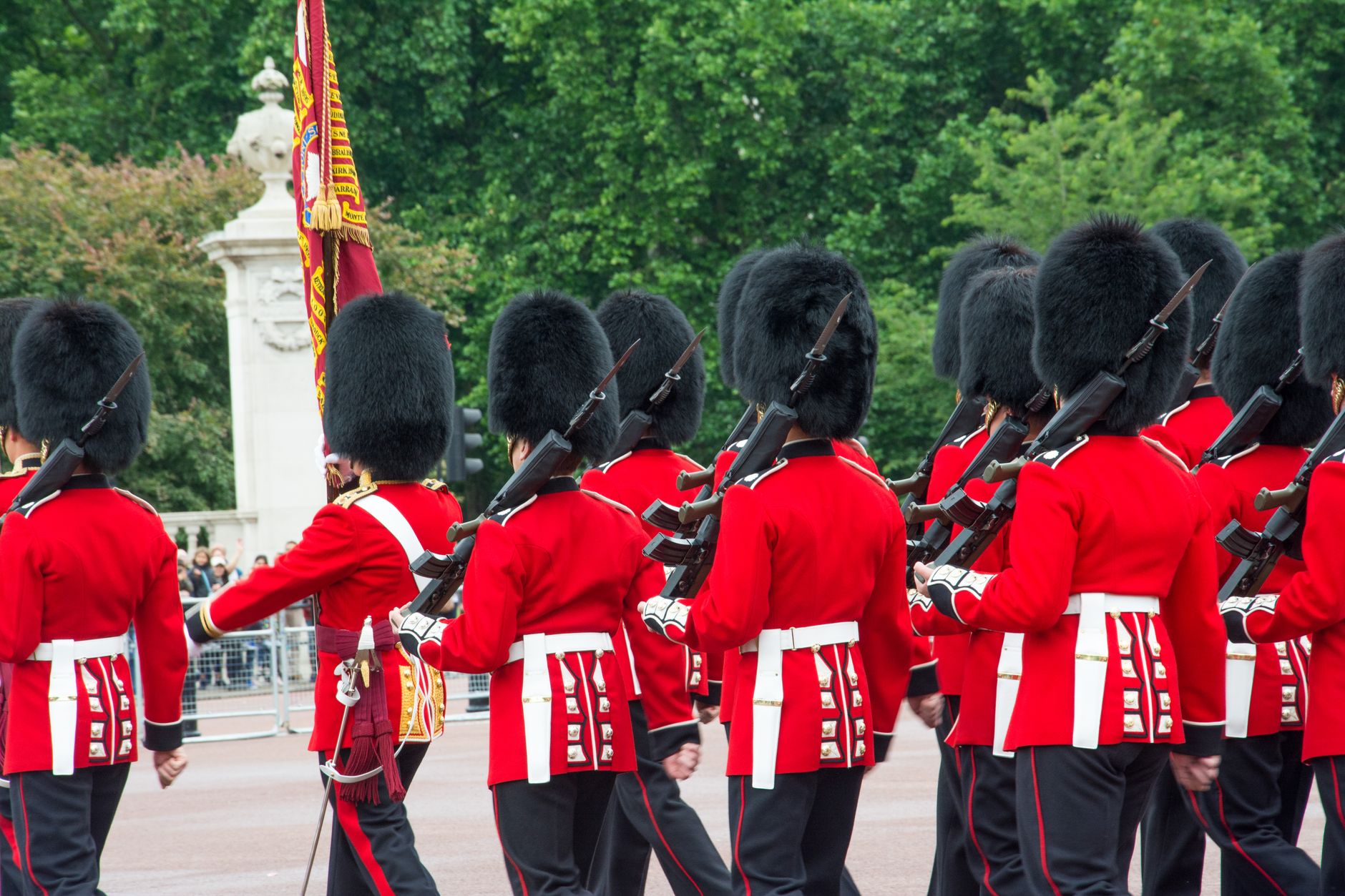
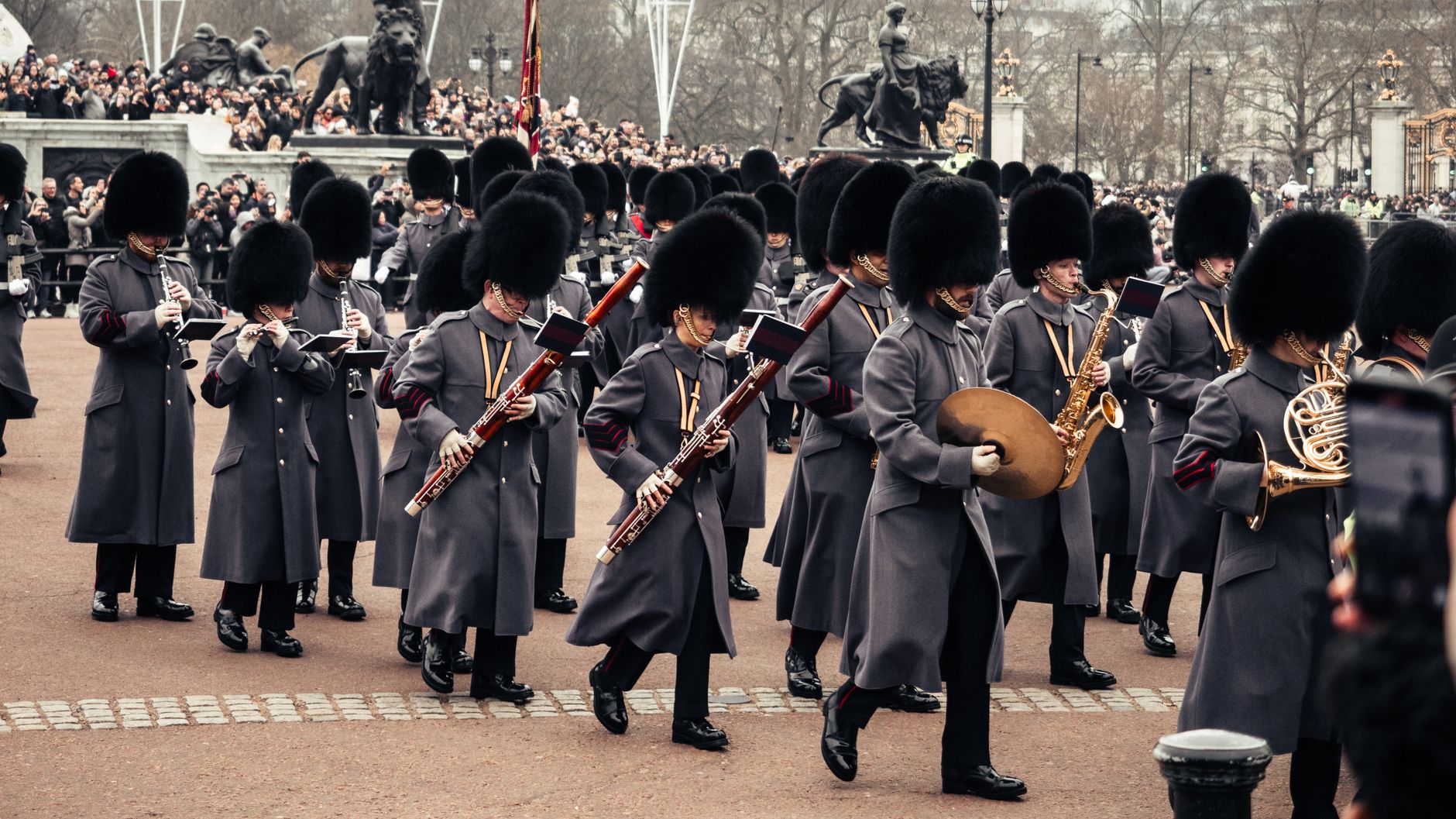
Trooping the Colour is the largest annual set piece, moving roughly 1,400 soldiers, 200 horses and 400 musicians through Horse Guards Parade on the second Saturday in June. The drill descends from a battlefield habit of parading regimental colours so that troops could recognise their rallying point through smoke.
The State Opening of Parliament carries older anxieties. Yeomen of the Guard still search the cellars with lanterns, a ritual answer to the Gunpowder Plot of 1605, and Black Rod has the Commons door slammed shut before knocking three times. The Imperial State Crown travels separately, set with 2,868 diamonds.
Royal warrants translate ceremony into commerce. Around 800 companies hold one, granted after supplying the royal household for at least five years, and the arms may then be displayed on packaging, vans and shopfronts. Warrants are reviewed regularly and withdrawn when supply stops, which keeps the list unexpectedly competitive.
Transport is theatre as well. The Gold State Coach, built in 1762, weighs about four tonnes and needs eight horses walking at little more than three miles per hour. Riders describe its suspension as unforgiving, which explains why it appears only for coronations rather than for routine engagements.
Royal Animals and the British Attachment to a Loyal Breed
Royal households have always kept animals on the payroll of national affection. The corgi line began in 1933 with a puppy named Dookie, and more than thirty followed across nine decades, alongside dorgis, gun dogs and stables of thoroughbreds. Public interest in each breed rose sharply whenever the photographs circulated widely.
The bulldog took a different route to national status. John Bull cartoons and wartime posters welded the breed to stubborn resilience, and demand followed the imagery. Searches for an english bulldog puppy for sale near me still spike after documentaries, as do queries for a british bulldog puppy for sale near me across the Home Counties.
French bulldogs then rewrote the rankings entirely, overtaking Labradors in annual Kennel Club registrations. A french bulldog puppy for sale now attracts more enquiries in Essex than most gundog breeds combined, and listings for a french bulldog puppy for sale uk are frequently claimed within days of first being posted.
Buying With the Care the College of Arms Gives a Crest
Heralds verify lineage before granting arms; buyers should verify health before granting money. Ask for Respiratory Function Grading, hip scores and eye certificates, and treat a blue french bulldog puppy for sale with caution, because that colour sits outside the recognised breed standard. Search puppy for sale french bulldog and the results demand real scrutiny.
Alternatives deserve a look. A mini bulldog puppy for sale usually means a crossbred smaller frame, an american bulldog puppy for sale near me suits active households with land, and anyone typing puppy bulldog for sale near me should always view the litter with its mother before committing anything.
How Essex Communities Keep the Traditions Alive
Local celebration is where monarchy stops being abstract. Street parties descend from the Peace Teas of 1919, and most Essex councils process road-closure applications for small residential events at little or no charge, provided organisers apply six to twelve weeks ahead and keep emergency access clear.
Beacons carry an older logic. The warning chain built against the Spanish Armada in 1588 has been revived for jubilees, with coastal and hilltop sites lit in sequence after dusk. Parish bell towers ring quarter peals, and civic services fill town halls with mayoral chains of office.
The pattern repeats with local variation, and the costs stay modest compared with the coverage such events attract. A comparison of the five customs most often revived in Essex towns shows how little separates a medieval charter obligation from a Saturday afternoon on a closed residential street.
| Tradition | Origin | Essex expression | Typical cost |
|---|---|---|---|
| Street party | Peace Teas, 1919 | Closed cul-de-sacs, shared trestle tables | Free to 120 GBP |
| Beacon lighting | Armada warning chain, 1588 | Coastal and hilltop sites | 300 to 800 GBP |
| Bell ringing | Parish practice, 16th century | Quarter peals at village churches | Volunteer, no cost |
| Civic procession | Mayoral office, medieval charter | Chains of office, town hall service | Council funded |
| Commemorative planting | Jubilee oaks, 1897 | Saplings on the village green | 25 to 90 GBP |
Commemorative planting outlasts everything else on that list. Jubilee oaks put in the ground in 1897 still stand on several Essex greens, and a sapling bought for 25 to 90 GBP gives a village a dated marker that residents can point to long after the bunting has been folded away.
What Ceremony and Companionship Actually Cost
The Sovereign Grant funds official duties and property maintenance, working out at a few pounds per person each year across the United Kingdom. Coronations and state funerals are budgeted separately by government departments, where policing is usually the single largest line rather than the ceremonial elements themselves.
Household participation stays cheap by comparison. A family can furnish a full celebration for less than the cost of a weekend away, and most of the material ends up stored in a loft and reused at the next occasion. Typical Essex prices sit in these ranges:
- Printed bunting, 10 metres of fabric: 8 to 20 GBP
- Commemorative crown coin, base metal: 13 to 20 GBP
- Silver proof coin, limited mintage: 90 to 250 GBP
- Afternoon tea hamper for six people: 40 to 85 GBP
- Village hall hire for a civic tea: 15 to 30 GBP per hour
Dogs are the expensive tradition. The french bulldog puppy price uk buyers should expect runs from roughly 1,500 to 3,500 GBP for health-tested, Kennel Club registered litters, and a puppy french bulldog for sale advertised far below that range usually signals imported stock or missing paperwork.
Ongoing costs matter more than the deposit. Insurance for a brachycephalic breed commonly runs 45 to 90 GBP monthly, and corrective airway surgery can reach 3,000 GBP. Anyone browsing a puppy french bulldog for sale uk should budget for a decade of care rather than a single weekend of excitement.
How did the British traditions of monarchy shape local celebrations?
Almost every village custom borrowed its shape from a national event. The Peace Teas of 1919 established the trestle-table format, the Silver Jubilee of 1935 added mass bunting production, and post-war coronations introduced communal television viewing in halls and pubs. Essex parishes adapted each template to whatever they already owned: church bells, cricket fields, marquees left over from the summer fete. Councils now publish simplified road-closure forms because demand became predictable rather than exceptional. The result is a calendar of small, repeatable rituals that need no palace involvement at all. A committee, a licence, some folding chairs and roughly 150 GBP will reproduce a street party recognisable to anyone who attended one seventy years earlier.
Is the bulldog genuinely part of Britain’s royal symbolism?
Indirectly, though the link is real enough. Bulldogs were never palace dogs in the way corgis were; the breed gained its status through political cartooning, where John Bull’s companion animal became shorthand for national stubbornness, and through wartime propaganda that fixed the association permanently. Royal patronage of the Kennel Club, founded in 1873, and of numerous breed societies gave dog ownership a formal place in civic life. That history is why enquiries for a british bulldog puppy for sale near me still carry patriotic weight that a spaniel search never does. The symbolism is cultural rather than constitutional, yet it visibly shapes buying behaviour across Essex every summer.
What should a first-time buyer check before choosing a puppy?
Start with documentation. Ask to see the dam with the litter, Kennel Club registration papers, a microchip certificate and the results of breed-specific health screening: Respiratory Function Grading for flat-faced breeds, hip and elbow scores for larger ones. A licensed breeder in England must display their licence number in every advertisement, and Lucy’s Law prohibits third-party sales of puppies under six months old. Visit twice where possible, at different times of day, and watch how the litter behaves when nobody is performing for you. Expect the breeder to interview you as closely as you interview them; the ones who ask nothing about your garden, working hours or previous experience are the ones to walk away from.